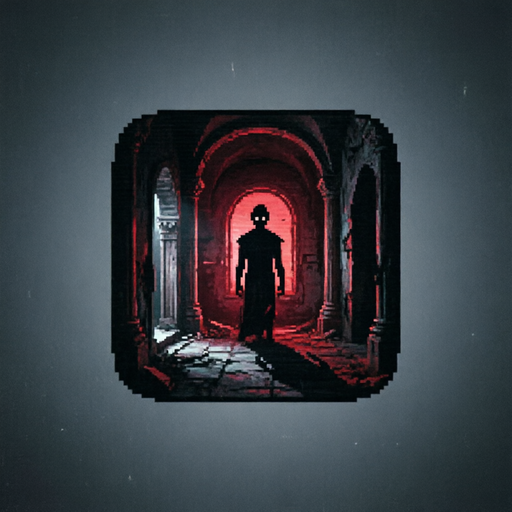
Tenebris Somnia Developer Interview: Live-Action Horror, Gameplay & Awards
Our breakdown of the Tenebris Somnia developer interview, plus how the Argentine horror game blends puzzles, combat, and live-action filmed scenes.
Why the Tenebris Somnia Developer Interview Matters Right Now
Most indie horror games reach for the same toolkit: a flashlight, a dark hallway, and a jump scare waiting around the corner. Tenebris Somnia takes a stranger path. When a new Tenebris Somnia developer interview arrived alongside fresh gameplay footage in late September 2026, it confirmed what horror fans had been murmuring about since the game's earliest showcase appearances — this is a project willing to step out of the engine entirely and cut to real, filmed horror. That single decision is why the Tenebris Somnia developer interview is worth your time even if you have never played a single indie scare-fest.
The premise, as described in the coverage, is deceptively familiar. Players work through a disturbing story by solving puzzles, exploring unsettling environments, and fighting horrible creatures. The twist is what happens between those moments: at key points the experience stops being a game and becomes a piece of short horror cinema, performed by real actors and built with practical effects.
According to GoNintendo's coverage of the new gameplay and developer interview, those filmed sequences were produced by an award-winning film crew from Argentina. That detail is doing a lot of heavy lifting, and it reframes how you should read everything else in the footage.
Here's the short version of what the new material puts on the table:
- Puzzle solving that gates progress rather than padding runtime
- Exploration of deliberately uncomfortable, lived-in spaces
- Combat against creatures that are meant to be horrible, not power fantasies
- Filmed interludes that replace gameplay instead of interrupting it
- A festival pedigree that predates the marketing push
If you have been burned by horror trailers that promise atmosphere and deliver noise, the developer interview is the more useful artifact. Trailers sell a mood; interviews reveal intent.
Gameplay Breakdown: Puzzles, Exploration, and Creature Combat
The clearest takeaway from the new gameplay is that Tenebris Somnia is structured as a classic survival-horror loop, not a walking simulator with a monster stapled on. You read a room, you solve what the room is hiding, you move deeper, and something is usually waiting.
| Gameplay pillar | What it looks like in practice | Why it matters to horror fans |
|---|---|---|
| Puzzle solving | Environmental logic puzzles that unlock the next area | Rewards attention over reflexes |
| Exploration | Unsettling interiors and spaces built around dread | Sustains tension between scares |
| Creature combat | Fights against horrible creatures, framed as survival | Keeps threat physical, not abstract |
| Narrative discovery | Story revealed in fragments through play | Encourages replay and theorizing |
| Filmed sequences | Live-action scenes triggered at key moments | Delivers a different kind of horror |
The important nuance is balance. Games that lean entirely on puzzles become cerebral; games that lean entirely on combat become exhausting. The footage suggests Tenebris Somnia rotates between the two, using exploration as the connective tissue that keeps both feeling earned.
For players who like to plan ahead, the practical advice is simple: treat the game as a reading exercise first and a fighting exercise second. In survival horror of this shape, the resource you are really managing is information — which door matters, which creature can be avoided, which puzzle you have already seen half the answer to.
The Live-Action Sequences That Set Tenebris Somnia Apart
This is the hook, and it is worth spelling out because it is genuinely unusual for an indie production. Rather than rendering its darkest moments in-engine, Tenebris Somnia shifts into scenes shot with real actors, real sets, and practical effects.
| Element | Typical game cutscene | Tenebris Somnia's filmed scenes |
|---|---|---|
| Performers | Animated characters or voice acting | Real actors on camera |
| Effects work | Digital VFX, particle systems | Practical, physical effects |
| Production team | In-house animation staff | Award-winning Argentine film crew |
| Function in the game | Bridges between gameplay beats | Replaces gameplay at key moments |
| Emotional register | Cinematic but game-native | Closer to short-form horror film |
The distinction between "cutscene" and "filmed sequence" is not semantic. A cutscene usually rewards you for finishing something. A filmed sequence, placed at a key moment, withholds control — you cannot pause, dodge, or reload. That loss of agency is a horror tool in itself, and it is the sort of idea that only works if the filmmaking is good enough to justify the interruption.
Community reports and player experience around showcase demos tend to focus on exactly this: whether the transition between playable sections and filmed sections feels seamless or jarring. That is the make-or-break question for any hybrid project, and it is a fair one to bring to the next Tenebris Somnia developer interview.
It also explains why the film crew's pedigree keeps coming up. Practical effects age well. Digital effects age on a schedule. A monster built by hand in Argentina still looks like a monster a decade later.
Awards, Showcases, and What They Signal
Before the new gameplay dropped, Tenebris Somnia had already spent years on the international showcase circuit. That matters for two reasons: it means the game has been seen by people who judge games for a living, and it means the current footage is the product of sustained iteration rather than a first pass.
| Recognition | Year | Result |
|---|---|---|
| EVA | 2023 | Best Game Winner |
| Unreal Argentina | 2024 | Winner |
| Latin American Games Showcase | 2024 | Official Selection |
| Latin American Games Showcase | 2025 | Official Selection |
| Latin American Games Showcase | 2026 | Official Selection |
| Day of the Devs | 2026 | Official Selection |
Three consecutive Latin American Games Showcase selections plus a Day of the Devs nod is not nothing. Festival selection is not a review score, and it should never be treated as one — but it does tell you that the game has survived repeated exposure to jaded audiences and kept getting invited back.
The Unreal Argentina win is the other useful data point. It suggests the technical foundation is solid, which is exactly the thing that hybrid live-action projects tend to get wrong. If the engine work were shaky, the filmed sequences would read as a workaround rather than a choice.
What the Community Wants Next
If community reports and player experience are any guide, the questions fans bring to the next Tenebris Somnia developer interview cluster into a few predictable areas. Here is how to think about each one, and where the answers tend to come from.
| Question | Why it matters | Where answers usually surface |
|---|---|---|
| How much of the game is filmed? | Sets expectations for pacing | Developer interviews and previews |
| Can filmed scenes be skipped? | Accessibility and replay value | Post-launch patch notes, store pages |
| How does combat scale over time? | Determines difficulty curve | Gameplay footage, hands-on previews |
| What platforms are planned? | Buying decisions | Official announcements, store listings |
| Is the story self-contained? | Sequel and DLC speculation | Developer Q&A sessions |
A few practical tips for following the game without drowning in speculation:
- Watch gameplay footage, not just trailers. Trailers cut around pacing problems; gameplay exposes them.
- Read interviews for design language. Phrases like "at key moments" tell you more than any hype quote.
- Track showcase appearances. A game that keeps getting selected is a game that keeps improving.
- Ignore leaked dates. Independent horror projects shift schedules constantly, and unconfirmed dates help no one.
- Follow the film crew, not just the studio. Their other work is the best predictor of the live-action quality.
The last point is underrated. If you want to know whether the filmed sequences will land, look at what that Argentine crew has made before. Style carries over.
FAQ
What is Tenebris Somnia? Tenebris Somnia is an independent horror game in which players solve puzzles, explore unsettling environments, and fight horrible creatures while uncovering a disturbing story. Its distinguishing feature is that key story moments are told through live-action filmed sequences rather than in-engine cutscenes.
Why does the Tenebris Somnia developer interview matter more than a trailer? Trailers are edited to sell a feeling. A Tenebris Somnia developer interview explains structure — how puzzles, exploration, combat, and filmed sequences fit together — which is the information players actually need to decide whether the pacing will suit them.
Are the live-action scenes part of the gameplay? They replace gameplay at key moments rather than running alongside it. According to the coverage, those scenes were made with real actors and practical effects by an award-winning film crew from Argentina, which is why they read as short horror cinema instead of standard cutscenes.
Has Tenebris Somnia won any awards? Yes. It was named Best Game Winner at EVA in 2023 and took a win at Unreal Argentina in 2024. It has also been an Official Selection at the Latin American Games Showcase in 2024, 2025, and 2026, and at Day of the Devs in 2026.
Should horror fans pay attention yet? Yes, with calibrated expectations. Festival recognition and repeated showcase selections are meaningful signals, but they are not a release date. The safest approach is to watch the gameplay footage directly, read the interviews for design intent, and wait for official announcements before planning around it.
Related Guides
Tenebris Somnia Behind the Scenes: How Practical FX Built the Game's Scariest Cinematics
A dev-confirmed look at Tenebris Somnia behind the scenes: the 30+ crew, practical FX, and post-production work behind its cinematic scares.
Tenebris Somnia Reddit: What Horror Fans Are Saying Before Launch
Tenebris Somnia reddit buzz is heating up before launch. Here's what players are discussing about the 16-bit horror game and its live-action cutscenes.
Tenebris Somnia Trailer: Live-Action Horror Meets Gameplay in New Look
A new Tenebris Somnia trailer blends gameplay with live-action horror filmed by an award-winning Argentine crew. Here's what it shows and why it matters.