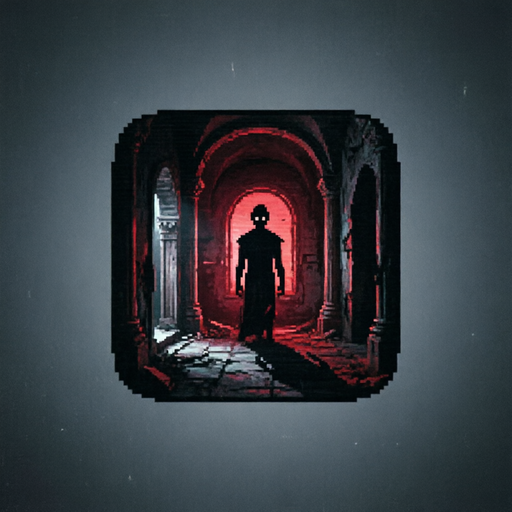
Tenebris Somnia Cutscenes Explained: How Live-Action Horror Frames the Nightmare
Tenebris Somnia cutscenes blend 2D retro survival horror with live-action film. Learn how the cinematics work, when they trigger, and why they matter.
Tenebris Somnia cutscenes are not an afterthought — they are the game's central hook. Instead of delivering another pixelated exposition dump, Andrés Borghi's retro survival horror adventure cuts away to live-action footage shot by an award-winning film crew from Argentina. If you want to understand how Tenebris Somnia cutscenes work before the game unlocks on October 16, 2026, this breakdown covers the format, the triggers, the language options, and the practical details that matter.
What Tenebris Somnia Cutscenes Actually Are
Tenebris Somnia is a survival horror adventure built in the spirit of Silent Hill and Resident Evil, but rebuilt around a retro 2D aesthetic pulled from the 8- and 16-bit era. You solve puzzles, you fight creatures, you explore a disturbing story. Then, at certain key points, the game stops being a 2D horror game and briefly becomes a short film.
The official Tenebris Somnia Steam page states it plainly: the secrets of the game lie within its cinematics. That one sentence tells you the live-action footage is not decorative. It is the delivery system for the story's biggest answers.
| Detail | What the store listing confirms |
|---|---|
| Format | Live action with real actors |
| Effects | Practical effects, not pure CGI |
| Crew | Award-winning film crew from Argentina |
| Framing | A "completely different point of view" from gameplay |
| Placement | Triggered at certain key points |
| Role | The game's secrets live inside them |
| Tagline | "What if they aren't just nightmares?" |
The practical-effects detail is worth pausing on. Practical gore, makeup, prosthetics, and physical sets give footage a texture that computer-generated imagery often struggles to match. It also means the film crew had to build the horror physically — lighting it, framing it, and shooting it the way a low-budget horror feature would.
How Live-Action Footage Sits Next to 2D Gameplay
The most interesting design question here is tonal, not technical. Most retro horror games keep you inside a single visual language from start to finish. Tenebris Somnia deliberately breaks that language whenever it wants to unsettle you.
| Layer | Gameplay sections | Live-action cinematics |
|---|---|---|
| Perspective | 2D retro presentation | Real camera, real space |
| Visual style | 8/16-bit inspired pixel work | Filmed actors and sets |
| Player control | Full — movement, combat, puzzles | None — you watch |
| Primary purpose | Survival, exploration, problem solving | Story, dread, revelation |
| Emotional effect | Tension you can act on | Helplessness you cannot |
| Information density | Clues scattered in the environment | Direct, concentrated plot beats |
That shift from agency to passivity is the whole trick. In gameplay, you are constantly making decisions. The moment a cinematic begins, the decisions are taken away, and the game can show you something you were not prepared for.
The store description notes that these sequences arrive from a completely different point of view. Practically, that means the camera is not bound to your character's position, your inventory, or your field of vision. It can show you a room you have not entered, a character you have not met, or an event happening somewhere else entirely.
Why the Medium Switch Creates Dread
- You cannot pause, dodge, or fight during a cinematic.
- The visual jump from pixel art to filmed footage makes the real world feel more immediate.
- Live-action sequences often reveal context that reframes what you just did in gameplay.
- Because the game hides its secrets in these scenes, they are functionally unskippable if you care about the plot.
Community reports from the playable demo suggest the transition lands harder than players expect on paper. If you have only seen screenshots, the contrast is easy to underestimate.
When Tenebris Somnia Cutscenes Trigger
The developers describe the trigger condition as "certain key points," which is intentionally vague. What matters for players is knowing what to do when one begins. The exact frequency is not documented in the store listing, so treat the following as structural guidance rather than a fixed schedule.
| Stage of play | What typically precedes a sequence | Your best move |
|---|---|---|
| Early exploration | Establishing a location or premise | Watch closely — this sets the rules |
| After a major puzzle | Completing a gated objective | Do not skip; plot context often follows |
| After a boss or creature encounter | Surviving a significant threat | Note any names, faces, or locations shown |
| Before a chapter transition | Reaching a new area | Expect a reframing of what you just saw |
| Late-game reveals | Approaching the conclusion | Avoid spoiler threads until you finish |
A simple habit helps here: keep a mental list of names, faces, and objects shown in each cinematic. Because the game ties its secrets to these scenes, a detail that seems like set dressing early on can become a puzzle answer several hours later.
Why the Cinematics Carry the Story, Not Just the Atmosphere
Plenty of horror games use cutscenes as rewards or breathers. Tenebris Somnia appears to use them as the primary narrative channel, which changes how you should approach them.
| Function | How it plays out |
|---|---|
| Plot delivery | Major story beats happen in live action, not in text logs |
| Mystery structure | The "what if they aren't just nightmares?" premise is explored on film |
| Contrast tool | Switching mediums makes the horror feel newly strange each time |
| Identity | The hybrid format is the game's main marketing hook |
| Replay value | Knowing the plot changes how you read earlier scenes |
If you skip or half-watch a sequence, you are skipping the part of the game the developers built the marketing around. That is a meaningful loss in a story-driven horror adventure.
Practical Tips for Getting the Most Out of the Cinematics
A few preparation steps will noticeably improve the experience, especially since the game is verified for Steam Deck and the developers recommend playing with a controller.
- Play with headphones. Filmed audio, practical effects, and ambient sound design carry more weight than a 2D mix typically does.
- Turn subtitles on before you start. The store listing shows no full-audio localization, which means spoken dialogue in the live-action sequences is most likely subtitled.
- Sit close enough to see detail. The whole point of live action is texture — faces, props, wounds. Phone-screen distance wastes it.
- Avoid spoiler threads until you finish. The secrets live in the cinematics, and a single screenshot can undo hours of build-up.
- Watch for environmental continuity. Locations and objects in the filmed footage may echo places you will visit later.
| Language | Interface | Subtitles |
|---|---|---|
| English | Yes | Yes |
| Spanish (Spain) | Yes | Yes |
| Spanish (Latin America) | Yes | Yes |
| Japanese | Yes | Yes |
| Portuguese (Brazil) | Yes | Yes |
Full audio is not listed for any language, so plan on reading rather than listening to dubbed dialogue. For a game built on an Argentine film production, that is not surprising.
Specs, Price, and Platform Notes Before You Play
Since the live-action footage is a substantial chunk of the download, storage is worth checking in advance. The listing requires 13 GB of available space.
| Requirement | Minimum | Recommended |
|---|---|---|
| OS | Windows 10 64-bit or later | Windows 11 64-bit |
| Processor | 2.4 GHz dual core or higher | 3.6 GHz quad core or higher |
| Memory | 8 GB RAM | 16 GB RAM |
| Graphics | 4 GB VRAM or greater | 8 GB VRAM or greater |
| DirectX | Version 11 | Version 11 |
| Storage | 13 GB available space | 13 GB available space |
Additional details worth knowing:
- The game launches at $24.99 with a 20% discount that brings it to $19.99 during the launch window, plus an extra discount for owners of FAITH.
- It is a single-player experience with Steam Achievements, Steam Cloud, and Family Sharing.
- Steam Deck compatibility is listed as Verified.
- The developers recommend playing with a controller, and Xbox controllers are specifically supported.
- A free demo is available if you want to sample the tone before committing.
Tenebris Somnia cutscenes are the reason to pay attention to the technical side at all. If the film sequences are the heart of the game, you want them running cleanly, with subtitles readable and audio intact.
FAQ
Are Tenebris Somnia cutscenes skippable? The store listing does not confirm whether the sequences can be skipped. Given that the developers describe the game's secrets as living inside the cinematics, skipping them would likely cost you major story context. Treat them as essential viewing on a first playthrough.
How many Tenebris Somnia cutscenes are there? The exact count has not been published. The developers describe them as appearing at certain key points rather than on a fixed schedule, so expect them tied to story milestones rather than evenly spaced intervals.
Do the live-action sequences replace the 2D gameplay? No. Tenebris Somnia cutscenes are interleaved with 2D survival horror gameplay — puzzle solving, exploration, and creature encounters. The two formats alternate, and the contrast between them is a deliberate part of the design.
What language are the live-action sequences in? The film crew is from Argentina, and the store page lists subtitles in English, Spanish (Spain), Spanish (Latin America), Japanese, and Portuguese (Brazil). No full-audio localization is listed, so subtitles are the practical way to follow the dialogue.
If you go in expecting a retro 2D horror game with a few filmed interludes, you will be surprised in the best way. The cinematics are not a garnish on top of the game — they are the part the whole experience is built to deliver.
Related Guides
Tenebris Somnia Demo Length Explained: How Long the Steam Next Fest Slice Takes
How long is the Tenebris Somnia demo? We break down demo length, pacing, puzzles, and whether the retro horror slice is worth your evening.
Tenebris Somnia Gameplay Explained: Combat, Puzzles, and Retro Horror Mechanics
A full breakdown of Tenebris Somnia gameplay — how the 2D retro survival horror loop works, combat and puzzle design, live-action cutscenes, and tips for your first run.
Tenebris Somnia How Long to Beat: Projected Playtimes, 100% Runs & Speed Tips
Tenebris Somnia how long to beat: no verified times exist yet, so we break down projected playtimes by playstyle, genre comparisons, and speed tips.
Tenebris Somnia Live Action Cutscenes Explained: How the Horror Mechanics Work
How Tenebris Somnia live action cutscenes work: triggers, practical effects, film crew, and how the FMV layers reshape retro survival horror pacing.