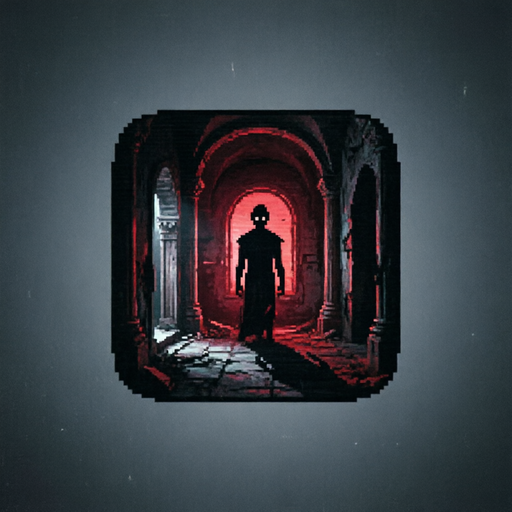
Tenebris Somnia Live Action Cutscenes Explained: How the Horror Mechanics Work
How Tenebris Somnia live action cutscenes work: triggers, practical effects, film crew, and how the FMV layers reshape retro survival horror pacing.
Tenebris Somnia is a 2D retro survival horror adventure that does something few games in the genre attempt: it yanks you out of the pixel world and into full-motion video shot with real actors. The Tenebris Somnia live action cutscenes are not a trailer trick or a marketing flourish — they fire at key story beats and force you to see the nightmare from a completely different point of view. With the game launching on October 16, 2026, here is how the Tenebris Somnia live action layer actually functions as a mechanic, and how to get the most out of it.
Why the Live Action Layer Is a Mechanic, Not a Cutscene
Most horror games treat cinematic sequences as a reward you sit through before the "real" game resumes. Tenebris Somnia inverts that relationship. The game's official Steam store page for Tenebris Somnia describes a survival horror adventure in the same vein as Silent Hill or Resident Evil, adapted to an 8-bit and 16-bit aesthetic — and then states plainly that the secrets of the game lie within its cinematics.
That sentence is the design thesis. The live action footage is where the story actually lives. The pixel-art exploration, puzzle solving, and creature combat are what you do between revelations.
| Layer | Format | Camera perspective | Player input |
|---|---|---|---|
| Exploration | 2D pixel art, 8/16-bit era style | Player-driven view of the environment | Full control |
| Puzzle and item management | 2D pixel art | Player-driven view | Full control |
| Creature encounters | 2D pixel art | Player-driven view | Full control |
| Story cinematics | Live action video with real actors and practical effects | Directed film camera, a completely different point of view | None — watch and absorb |
The practical consequence is simple: the FMV segments carry information the 2D layer cannot deliver. Because they are shot from a separate vantage point, they can show you a room, a face, or an event that your character never witnesses. That gap between what you know and what your character knows is the mechanic.
How the Tenebris Somnia Live Action Triggers Work Mid-Session
One mechanical detail is confirmed by the developer: the sequences appear when you reach certain key points. The live action is therefore progress-gated rather than random. You will not stumble into FMV by wandering; you earn it by advancing the story.
That structure shapes how a session plays out. Here is the loop you can expect to repeat.
| Step | What happens on screen | What you should be doing |
|---|---|---|
| 1 | You explore a 2D area | Sweep rooms for puzzle items and supplies before moving on |
| 2 | You solve an environmental puzzle or fight a creature | Conserve resources; horror combat punishes waste |
| 3 | You cross a story key point | Stop moving and give the transition your full attention |
| 4 | A live action sequence plays | Track faces, props, room layouts, and dialogue |
| 5 | Control returns to the 2D layer | Re-check the environment for anything that changed |
Steps 3 and 4 are the ones players rush. Do not. The cinematics are the payoff for the puzzle you just solved, and they frequently reframe it. If you alt-tab during a Tenebris Somnia live action sequence, you are skipping the equivalent of a boss fight's second phase.
A useful habit: after each FMV segment ends, pause for ten seconds and ask what changed in your understanding rather than what changed on screen. The 2D world often looks identical while your grasp of the plot has shifted underneath it.
Inside the Argentine Film Crew Behind the Sequences
The live action material was produced by a professional, award-winning film crew from Argentina, working with real actors and practical effects. That production choice matters more than it sounds. Practical effects — physical prosthetics, on-set lighting, in-camera tricks — behave differently from CG. They carry texture and imperfection that reads as documentary rather than animation, which is exactly the wrongness a horror game wants.
| Detail | Information |
|---|---|
| Developer | Andrés Borghi, Saibot Studios |
| Publisher | New Blood Interactive |
| Release date | October 16, 2026 |
| Genre tags | Adventure, Indie |
| Live action crew | Award-winning film crew from Argentina |
| Effects approach | Real actors and practical effects |
| Launch price | $24.99, with a 20% discount to $19.99 on day one |
| Loyalty discount | Additional discount for players who own FAITH |
| Demo | Free demo available on Steam |
The publisher, New Blood Interactive, has a track record of backing retro-styled horror with strong authorial voices, and the pairing here is deliberate: a 2D game with a film crew attached is a strange pitch, and that strangeness is the point.
How to Read the Tenebris Somnia Live Action Sequences for Clues
Treat every FMV segment as a crime scene you are inspecting, not a movie you are watching. The following checklist is the most practical advice in this article.
| Detail to track | Why it is worth your attention |
|---|---|
| Room layout and set dressing | Live action spaces may echo puzzle locations you have already cleared |
| Props and objects | Handled objects in film tend to matter narratively |
| Character faces and names | Actors represent characters you may only know as sprites |
| Lighting and framing choices | Directorial emphasis signals what the game wants you to suspect |
| Continuity between sequences | Repeated locations suggest you are seeing the same place from different angles |
| Dialogue wording | Phrasing often reframes the question the game opened with |
The store page's tagline — "What if they aren't just nightmares?" — tells you the intended reading. The live action exists to make you doubt the 2D reality you just spent an hour trusting.
Survival Horror Mechanics Wrapped Around the FMV Breaks
Between cinematics, Tenebris Somnia is a traditional survival horror game: you solve puzzles, you fight horrible creatures, and you manage scarce resources. The retro 2D presentation changes how that tension feels, but not what it demands.
| Element | Classic 90s survival horror | Tenebris Somnia |
|---|---|---|
| Visual perspective | Fixed 3D camera or pre-rendered backgrounds | Retro 2D, 8/16-bit era aesthetic |
| Story delivery | In-engine scenes or pre-rendered CG | Live action with real actors and practical effects |
| Combat pressure | Limited ammo, deliberate engagements | Same scarcity logic, applied in 2D |
| Puzzle structure | Item-based, environment-driven | Item-based, environment-driven |
| Atmosphere source | Dread of the unknown around a corner | Dread of what the camera will show you next |
Two mechanical notes worth planning around. First, the developers recommend playing with a controller, and Xbox controllers are listed as supported. Second, Steam Deck compatibility is rated Verified, so the handheld route is viable if you prefer horror in short, tense bursts.
Community reports on the demo are still thin — the store page currently shows no user reviews — so treat any detailed walkthrough claims circulating online with caution until the game is actually out. What is documented is the structure: puzzles, creatures, and cinematics at key points.
Specs, Languages, and Launch Logistics
The game is not demanding by modern standards, but the storage footprint is larger than the pixel art might suggest — a reasonable side effect of shipping live action footage at full resolution.
| Requirement | Minimum | Recommended |
|---|---|---|
| OS | Windows 10 64-bit or later | Windows 11 64-bit |
| Processor | 2.4 GHz dual core or higher | 3.6 GHz quad core or higher |
| Memory | 8 GB RAM | 16 GB RAM |
| Graphics | 4 GB VRAM or greater | 8 GB VRAM or greater |
| DirectX | Version 11 | Version 11 |
| Storage | 13 GB available space | 13 GB available space |
| Language | Interface | Subtitles |
|---|---|---|
| English | Yes | Yes |
| Spanish — Spain | Yes | Yes |
| Spanish — Latin America | Yes | Yes |
| Japanese | Yes | Yes |
| Portuguese — Brazil | Yes | Yes |
Note the audio column: full audio is not listed for any language, which means the live action performances are carried by subtitles rather than dubbed voice work. For a game built on filmed scenes, that is worth knowing before you buy — plan to read.
Steam features include single-player, Steam Achievements, Steam Cloud, and Family Sharing. Steam Cloud matters here specifically because the live action triggers are tied to story progression; you will not lose your place in the sequence order if you switch machines.
FAQ
What exactly are the Tenebris Somnia live action cutscenes? They are full-motion video sequences, shot with real actors and practical effects by an award-winning Argentine film crew, that play when you reach key story points. The Tenebris Somnia live action segments are shown from a completely different point of view than the 2D gameplay and are described by the developer as where the game's secrets are hidden.
Do I need to play in one sitting to follow the story? No. The sequences are tied to story checkpoints rather than a running timer, and Steam Cloud support means your progress carries between devices. You can play in sessions without losing the thread.
Is there a way to try before buying? Yes. A free demo is available on Steam. Given that the live action footage is the game's defining feature, the demo is the fastest way to decide whether the FMV-to-2D rhythm works for you.
How much does it cost, and are there discounts? The game launches at $24.99, with a 20% day-one discount bringing it to $19.99. Players who already own FAITH receive an additional discount on top of that.
The short version: play the demo, watch every cinematic without touching your phone, and treat the pixel world and the filmed world as two halves of one puzzle. That is how Tenebris Somnia is built to be played.
Related Guides
Tenebris Somnia Cutscenes Explained: How Live-Action Horror Frames the Nightmare
Tenebris Somnia cutscenes blend 2D retro survival horror with live-action film. Learn how the cinematics work, when they trigger, and why they matter.
Tenebris Somnia Demo Length Explained: How Long the Steam Next Fest Slice Takes
How long is the Tenebris Somnia demo? We break down demo length, pacing, puzzles, and whether the retro horror slice is worth your evening.
Tenebris Somnia Gameplay Explained: Combat, Puzzles, and Retro Horror Mechanics
A full breakdown of Tenebris Somnia gameplay — how the 2D retro survival horror loop works, combat and puzzle design, live-action cutscenes, and tips for your first run.
Tenebris Somnia How Long to Beat: Projected Playtimes, 100% Runs & Speed Tips
Tenebris Somnia how long to beat: no verified times exist yet, so we break down projected playtimes by playstyle, genre comparisons, and speed tips.