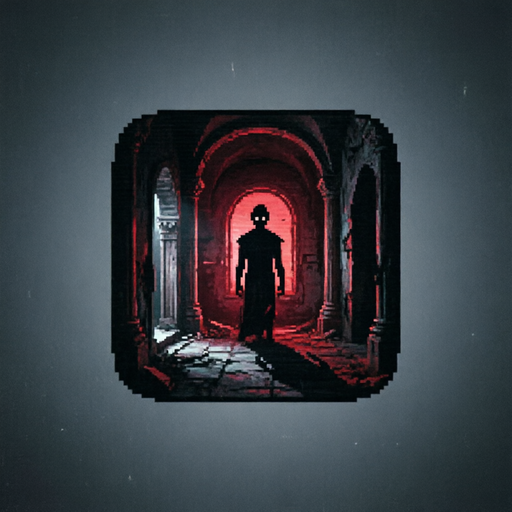
Tenebris Somnia Gameplay Explained: Combat, Puzzles, and Retro Horror Mechanics
A full breakdown of Tenebris Somnia gameplay — how the 2D retro survival horror loop works, combat and puzzle design, live-action cutscenes, and tips for your first run.
Tenebris Somnia gameplay asks a question most horror titles avoid: what if the nightmares were real? Built by developer Andrés Borghi with Saibot Studios and published by New Blood Interactive, this 2D retro survival horror adventure arrives on October 16, 2026, pairing 8- and 16-bit style exploration with live-action cutscenes shot by a professional film crew. Understanding how the Tenebris Somnia gameplay loop is structured before you sit down will save you a lot of frustration — and a fair number of deaths.
Below is a complete mechanical breakdown: what the core loop asks of you, how combat and puzzles interact, what the live-action sequences actually do to the pacing, and the practical details — specs, controls, languages — you need before launch day.
What Tenebris Somnia Gameplay Actually Looks Like
The elevator pitch is deliberately familiar. Tenebris Somnia is a survival horror adventure in the tradition of Silent Hill and Resident Evil, but rebuilt for a retro 2D aesthetic drawn from the 8- and 16-bit era. You explore, you solve puzzles, and you fight creatures the developers describe in no uncertain terms as horrible.
What separates it from a straightforward retro throwback is the presentation split. The main experience is rendered in pixel art from a top-down or side-on 2D perspective, while key story beats cut away to sequences filmed with real actors, real sets, and practical effects. That contrast is the game's signature, not a bonus feature.
| Detail | Confirmed Info |
|---|---|
| Developer | Andrés Borghi, Saibot Studios |
| Publisher | New Blood Interactive |
| Release date | October 16, 2026 |
| Genre | Adventure, Indie — 2D retro survival horror |
| Launch price | $24.99, discounted 20% to $19.99 on day one |
| Extra discount | Additional savings for owners of FAITH: The Unholy Trinity |
| Demo | Free demo available on Steam |
| Players | Single-player only |
| Steam Deck | Verified |
The Core Gameplay Loop: Explore, Solve, Survive
The rhythm of play follows classic survival horror structure: a hub or explorable area, gated progression, and a steady drain on your resources. What changes is how tightly the puzzle and combat systems are braided together.
| Loop Stage | What You're Doing | Why It Matters |
|---|---|---|
| Explore | Moving through 2D environments, mapping routes and locked doors | Backtracking is efficient only when you remember what blocked you |
| Investigate | Reading notes, examining objects, triggering story beats | Clues often double as puzzle solutions or route hints |
| Solve | Manipulating objects, codes, and environmental logic | Progress gates are puzzle-driven, not combat-driven |
| Fight or avoid | Dealing with creatures using limited tools | Every hit you take is a resource you can't spend later |
| Cutscene | Reaching a key point and shifting to live-action footage | Story context arrives from a completely different viewpoint |
That last row is the structural twist. In most horror games, cinematics are a reward you watch. Here, the game explicitly tells you the secrets lie within the cinematics — which means paying attention during those sequences is itself a mechanic, not a break from one.
Because the game isn't out yet at the time of writing, community reports on exact encounter counts and puzzle difficulty are still thin — the Steam page currently shows no user reviews. The free demo is the most reliable way to test the loop yourself before spending money.
Combat, Creatures, and Resource Pressure
Combat in the survival horror tradition is never about winning a firefight. It's about deciding whether a fight is worth having. Tenebris Somnia follows that philosophy: you're fighting horrible creatures, but the game gives you reasons to walk away from some of them.
| Situation | Aggressive Approach | Conservative Approach |
|---|---|---|
| Single creature, open room | Kill it and clear the path | Circle around and save ammo |
| Narrow corridor | Often unavoidable — commit early | Backtrack to a wider space first |
| Unknown room beyond a door | Risky; you can't see threats | Peek, retreat, plan the route |
| Low resources, long path ahead | Likely a death sentence | Avoid everything and bank supplies |
The practical takeaway: treat every encounter as a cost-benefit decision rather than a reflex test. Players who treat retro horror as an action game typically burn their resources in the first third and then hit a wall.
Live-Action Cutscenes: The Part Nobody Expects
This is the element that makes the Tenebris Somnia gameplay experience genuinely unusual. At certain key points, the game shifts perspective entirely and hands the story to live-action footage — real actors, real props, practical effects — produced by an award-winning film crew from Argentina.
Three things follow from that design choice:
- Tonal whiplash is intentional. The jump from pixel art to filmed footage is jarring by design. It reframes the "nightmare" framing as something more physical.
- Pacing changes. The action stops, and the game asks you to watch rather than play. If you skip cutscenes out of habit, you're skipping content the developers describe as central to the mystery.
- Detail matters. Since the game states its secrets live inside the cinematics, background props, set dressing, and actor performance carry information a skippable cutscene normally wouldn't.
The store tagline — "What if they aren't just nightmares?" — lands differently once you've seen the live-action material. The filmed sequences aren't decoration; they're the argument the game is making.
Controls, Performance, and Platform Details
Before you buy, here's the practical layer. The developers recommend playing with a controller, and Xbox controllers are explicitly supported.
| Platform Feature | Status |
|---|---|
| Single-player campaign | Yes |
| Steam Achievements | Yes |
| Steam Cloud saves | Yes |
| Family Sharing | Yes |
| Controller support | Xbox controllers; controller recommended |
| Steam Deck | Verified compatible |
| Requirement | Minimum | Recommended |
|---|---|---|
| OS | Windows 10 64-bit or later | Windows 11 64-bit |
| Processor | 2.4 GHz dual core or higher | 3.6 GHz quad core or higher |
| Memory | 8 GB RAM | 16 GB RAM |
| Graphics | 4 GB VRAM or greater | 8 GB VRAM or greater |
| DirectX | Version 11 | Version 11 |
| Storage | 13 GB available space | 13 GB available space |
| Language | Interface | Subtitles | Full Audio |
|---|---|---|---|
| English | Yes | Yes | — |
| Spanish (Spain) | Yes | Yes | — |
| Spanish (Latin America) | Yes | Yes | — |
| Japanese | Yes | Yes | — |
| Portuguese (Brazil) | Yes | Yes | — |
Note that the listing shows interface and subtitle support for all five languages with no full audio track listed — worth knowing if you rely on dubbing.
Tips for Your First Hours of Tenebris Somnia Gameplay
These habits come straight from how the loop is built, and they'll hold up whether you're playing the demo or the full release.
- Play the free demo first. It costs nothing, and it tells you whether the live-action-to-pixel-art switch works for you before you commit $19.99–$24.99.
- Use a controller. The developers recommend it, and Xbox pads are supported out of the box.
- Map your backtracking. Note which doors are locked and what you were missing when you found them. Puzzle-gated progression punishes poor memory more than poor reflexes.
- Hoover up readable items. In this genre, notes and environmental details are usually the puzzle key, not flavor text.
- Don't watch the cinematics passively. The game tells you its secrets are in them. Track who appears, what they're holding, and where the scene is set.
- Bank supplies early. The opening hours of survival horror games are almost always more generous than the closing hours.
- Check the launch discount window. The 20% day-one discount brings the price to $19.99, and owners of FAITH: The Unholy Trinity get an additional reduction — but those terms are tied to showing up early.
How It Compares to Classic Survival Horror
| Element | Classic 90s Survival Horror | Tenebris Somnia |
|---|---|---|
| Visual style | Early 3D or pre-rendered backgrounds | Retro 2D, 8/16-bit aesthetic |
| Story delivery | In-engine cutscenes, occasional FMV | Live-action sequences with practical effects |
| Combat emphasis | Deliberate, resource-scarce | Same philosophy, 2D combat framing |
| Puzzle role | Progress gates | Progress gates |
| Perspective shifts | Rare | Central to the design |
If you've bounced off retro horror because the combat felt stiff or the pacing sagged, the cutscene structure here may be the thing that keeps you engaged — it breaks the exploration rhythm at regular intervals and reframes the story from a completely different point of view.
For the definitive feature list, price, and demo download, check the official Tenebris Somnia Steam store page.
FAQ
Is there a free demo of Tenebris Somnia gameplay? Yes. A free demo is available on Steam, and it's the best way to sample the mix of 2D exploration and live-action cinematics before launch day. Since the full game isn't out yet, the demo is also the only hands-on material most players currently have access to.
Does Tenebris Somnia have multiplayer or co-op? No. The store listing confirms a single-player experience only, alongside Steam Achievements, Steam Cloud, and Family Sharing. It's built as a solo horror campaign.
Do I need to play FAITH first? No. The connection is a publisher promotion, not a story requirement — owners of FAITH: The Unholy Trinity receive an additional discount on Tenebris Somnia. Both are published by New Blood Interactive, but they're separate games with separate stories.
What should I expect from the Tenebris Somnia gameplay difficulty? Expect classic survival horror pressure rather than action-game pacing: limited resources, puzzle-gated progression, and creatures you're often better off avoiding. The developers recommend a controller, and the Steam Deck build is Verified, so handheld play is a viable option for your first run.
How long is the game? That hasn't been confirmed in the available material. Length details typically surface closer to or after release, so check the Steam page and post-launch player impressions for accurate completion times.
Related Guides
Tenebris Somnia Cutscenes Explained: How Live-Action Horror Frames the Nightmare
Tenebris Somnia cutscenes blend 2D retro survival horror with live-action film. Learn how the cinematics work, when they trigger, and why they matter.
Tenebris Somnia Demo Length Explained: How Long the Steam Next Fest Slice Takes
How long is the Tenebris Somnia demo? We break down demo length, pacing, puzzles, and whether the retro horror slice is worth your evening.
Tenebris Somnia How Long to Beat: Projected Playtimes, 100% Runs & Speed Tips
Tenebris Somnia how long to beat: no verified times exist yet, so we break down projected playtimes by playstyle, genre comparisons, and speed tips.
Tenebris Somnia Live Action Cutscenes Explained: How the Horror Mechanics Work
How Tenebris Somnia live action cutscenes work: triggers, practical effects, film crew, and how the FMV layers reshape retro survival horror pacing.